Ice Dams on Roof Edges: How to Stop Them Before They Start
NORTHERN VIRGINIA WINTER ROOF GUIDE
Ice Dams on Roof Edges: How to Stop Them Before They Start
What causes them, the damage they leave behind, and five proven ways to keep your roof clear this winter.
⏱ 4 MIN READ · UPDATED OCTOBER 2026
CausesWarning SignsSafe RemovalPrevention
Northern Virginia winters swing between snow, sun and hard freezes, sometimes in the same week. That cycle is exactly what forms ice dams on roof edges: thick ridges of ice that trap melting snow behind them. Ice dams look harmless from the driveway, but the water they hold back can work under your shingles and into your attic, walls and ceilings. Here’s what causes them, how to spot trouble early, and the fixes that actually prevent them.
Quick answerIce dams form when heat escaping from your living space melts snow on the upper roof and the water refreezes at the colder eaves. The lasting fix is a colder roof deck: better attic insulation, air sealing and ventilation, backed by ice and water shield at the eaves.
What Causes Ice Dams on Roof Edges?
An ice dam needs three things: snow on the roof, a warm upper roof and cold eaves. Most of that heat comes from your house, not the sun. Warm air leaks into the attic through gaps around light fixtures, the attic hatch and plumbing vents, and thin insulation lets even more heat through the ceiling. Here’s how it plays out:
01
Heat escapes
Warm air from the living space leaks into the attic and warms the underside of the roof deck.
02
Snow melts
Snow on the upper roof melts, even when it’s below freezing outside, and the water runs downhill.
03
Water refreezes
At the eaves, which hang past the warm walls, the deck is cold and the water freezes into a ridge.
04
Water backs up
New meltwater pools behind the ridge and works up under the shingles, where it can leak inside.
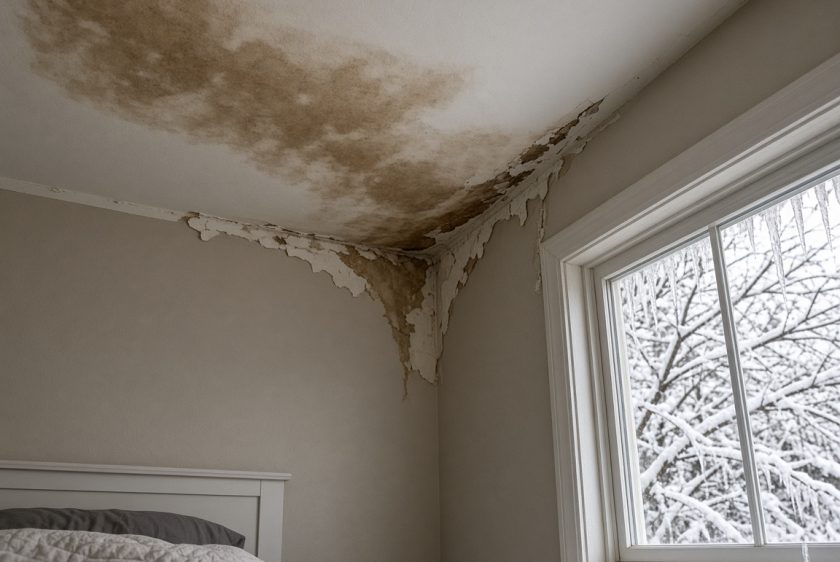
Ceiling stains near an exterior wall are a classic sign of an ice dam leak.
Warning Signs of Ice Dam Damage
You don’t need to climb a ladder to spot trouble. From the yard and the attic, look for:
A thick ridge of ice along the roof edge or packed inside the gutters
Large icicles, especially with water dripping behind them
Water stains or peeling paint on ceilings and upper walls near exterior walls
Damp, matted insulation or frost on nail tips in the attic
Gutters pulling away from the fascia under the weight of the ice
Left alone, that slow leak can rot roof decking, ruin drywall and feed mold. If you see ice dams on roof edges two winters in a row, the problem is in the attic, not the weather. Already seeing stains? Our roof repair team can find and fix the leak anywhere from Fairfax to Woodbridge.
How to Remove an Ice Dam Safely
If an ice dam is already leaking, the goal is to open a channel so water can drain, without damaging the roof or putting yourself at risk.
Do
Use a roof rake from the ground to pull snow off the first few feet of roof
Lay calcium chloride ice melt socks across the dam to cut a drainage channel
Call a professional for low-pressure steaming if water is coming inside
Don’t
Chip at the ice with a hammer, shovel or ice pick
Use rock salt, which can damage shingles, metal and plants
Climb onto an icy roof or lean a ladder against loaded gutters
5 Ways to Prevent Ice Dams on Roof Edges
Removal treats the symptom. Prevention keeps your roof deck cold so snow melts evenly and drains away:
Seal attic air leaks. Caulk and foam gaps around light fixtures, chimneys, vent stacks and the attic hatch. The ENERGY STAR guide to sealing and insulating shows where to look.
Add insulation. Bring attic insulation up to current recommendations so less heat reaches the roof deck.
Balance ventilation. Soffit intake vents paired with a ridge vent pull cold outside air under the deck.
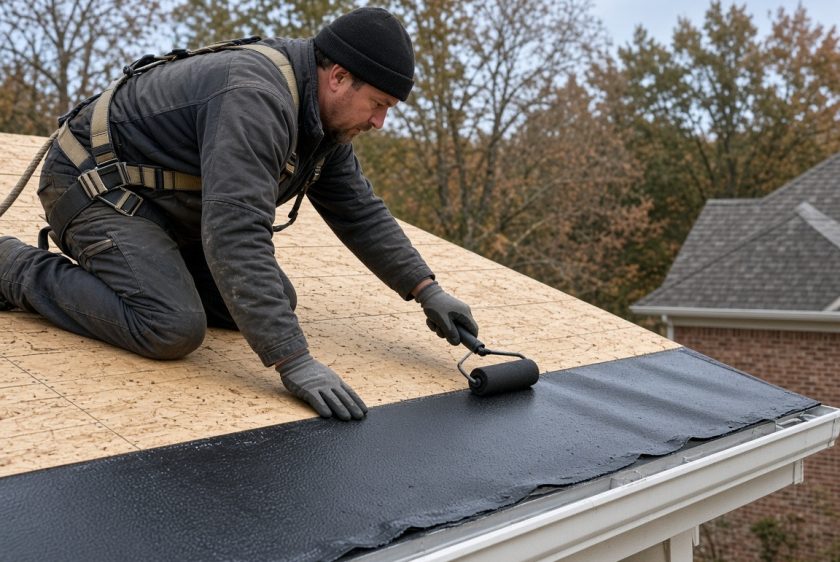
Install ice and water shield. During a roof replacement, this self-adhering membrane goes along the eaves and in the valleys to seal around nails if water ever backs up.
Keep gutters flowing. Clean gutters before winter, and consider gutter guards so leaves don’t trap water that freezes solid.
Heat cables can help on one problem section, but they treat the symptom and add to your electric bill, so think of them as a backup, not a cure. Wondering about guards? Here’s our take on whether gutter guards are worth it.
Ice and water shield goes down along the eaves before new shingles are installed.
Heat escaping from the living space warms the upper roof and melts snow. The water runs down to the colder eaves and refreezes into a ridge that traps more meltwater behind it.
Many policies cover sudden interior water damage from an ice dam, but not removing the ice or fixing the attic problem that caused it. Check your policy and photograph any damage.
A new roof adds ice and water shield at the eaves, which helps prevent leaks. To stop ice dams from forming, pair it with proper insulation, air sealing and ventilation.
Stop Ice Dams on Roof Edges Before the First Big Snow
Nations Choice Exteriors has protected Northern Virginia roofs since 1993. As a GAF-Certified, BBB A+ rated contractor, we’ll inspect your roof, attic ventilation and gutters, explain what’s causing your ice dams, and give you a written plan with no pressure. Call (571) 389-7500.