Best Roof Shingle Colors for Northern Virginia Homes
2026 NORTHERN VIRGINIA ROOFING GUIDE
Best Roof Shingle Colors for Northern Virginia Homes
How to choose a shingle color that fits your home, boosts curb appeal, and holds its value
⏱ 4 MIN READ
Choosing roof shingle colors is one of the few exterior decisions you will live with for 25 years or more, so it is worth taking your time. The right color can make a brick colonial look timeless or modernize a tired craftsman; the wrong one can clash with your siding, fade quickly in sunny spots, or quietly cost you at resale. This guide walks Northern Virginia homeowners through the shingle colors that suit our area, how to pick a color that matches your home, and a few things to weigh beyond color.
Why Roof Shingle Colors Matter More Than You Think
Your roof is roughly 40% of what people see from the street, so its color sets the tone for the whole house. Beyond curb appeal, shingle color has two practical impacts: resale value and attic temperature. Real-estate studies suggest that popular, neutral roof colors tend to be more attractive and help homes sell faster, while dated or bold hues can work against a sale. Color also affects how much heat the roof absorbs, which matters during a humid Virginia summer.
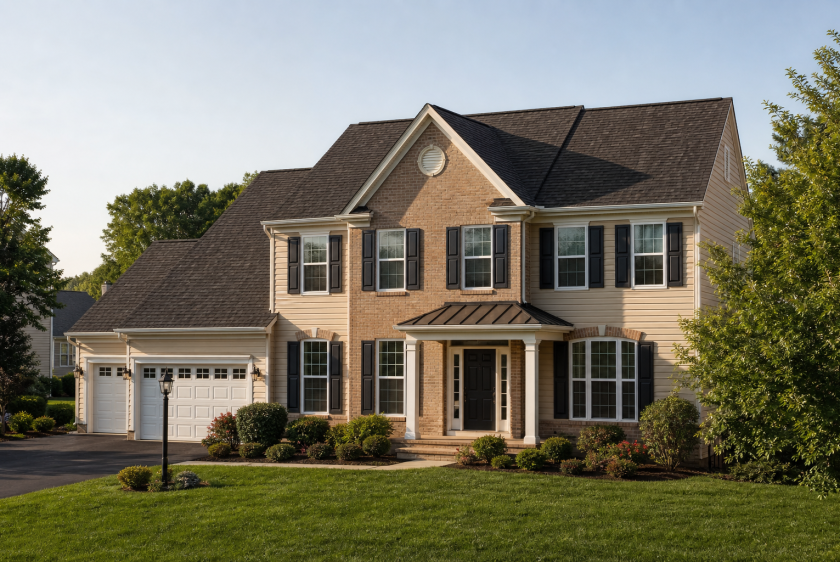
Our market favors tasteful classic tones that echo traditional brick and colonial architecture. That does not mean you cannot have fun with it, just that the safest long-term moves are usually grays, browns, and weathered blends.
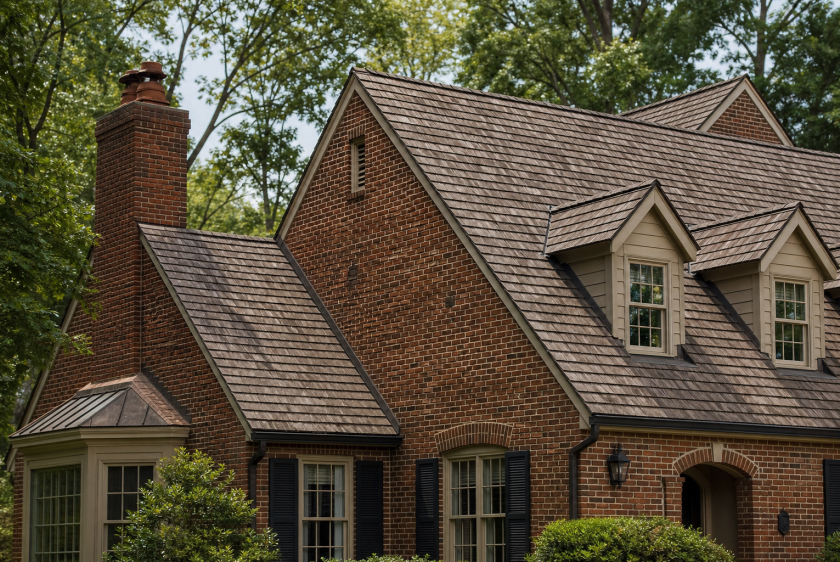
Warm Weathered Wood shingles complement a red-brick Northern Virginia colonial.
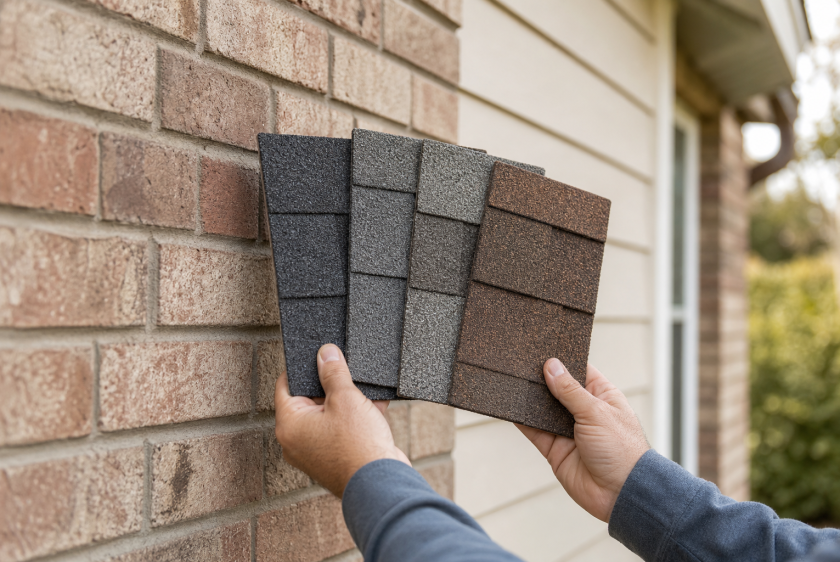
Comparing roof shingle color samples against a home’s brick and siding in natural light.
How to Choose the Right Shingle Shade for Your Home
The best way to land on a color that still looks good in 10 years is to start with the permanents: brick, stone, and siding do not change, so let them guide you. A few handy rules:
Match undertones, not exact shades. Warm brick pairs best with brown, tan, or weathered-wood shingles; cool gray or white siding pairs best with charcoal, slate, or pewter.
Use contrast for definition. A roof a few shades darker than the walls looks intentional.
Pull a third color from the trim or stone. Echoing an accent ties everything together.
Order physical samples. Screens lie. Always view shingles in full sun and in shade, outdoors.
The Most Popular Roof Shingle Colors in Northern Virginia
Because we install GAF Timberline shingles, homeowners here tend to stick with a few proven families:
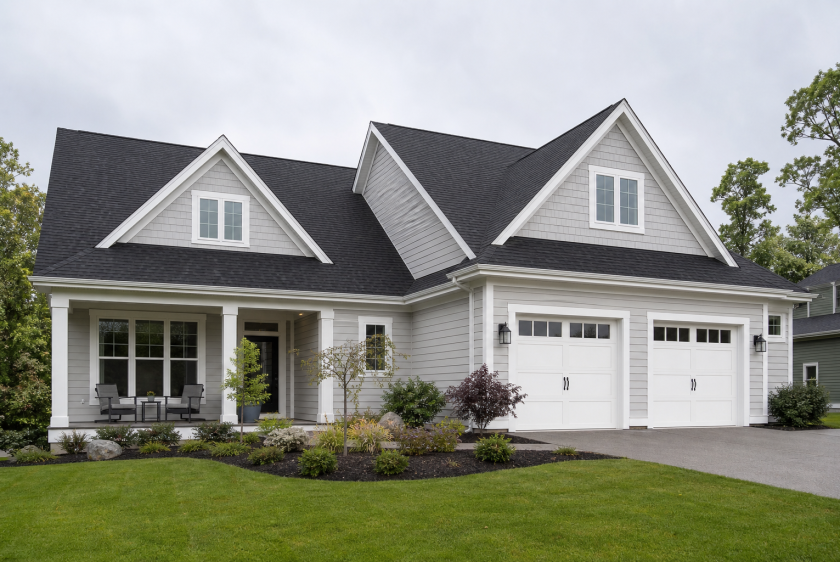
Charcoal and Pewter Gray — the most popular pick; great for gray, white, or blue houses and right at home on a modern farmhouse.
Weathered Wood — a warm gray-brown blend that complements tan, beige, and mixed exteriors. This is our most versatile all-purpose option.
Barkwood and Shakewood — rich browns that play up the warmth in the red and brown brick found all over Northern Virginia.
Slate and Williamsburg Slate — deep blue-grays that look refined on historic or colonial homes without looking flat.
These tones photograph well, resist fading, and appeal to a wide range of buyers. You can preview combinations on the GAF home remodeler tool before you commit.
Light vs Dark Shingles in Virginia’s Climate
A common question is whether a dark roof will overheat the house. In our climate — hot summers and fairly mild winters — the difference is smaller than most homeowners expect. Lighter shingles reflect a bit more heat and may marginally help cooling costs, while darker shingles shed snow slightly faster in winter. Modern GAF shingles also come in ENERGY STAR–rated reflective options for those chasing efficiency. In practice, shingle color matters far less than proper attic ventilation and insulation, so choose the look you love and let ventilation do the rest.
A crisp charcoal roof contrasts beautifully with light-gray siding on a Northern Virginia home.
Start from your home’s permanent materials — brick, stone, and siding — and choose a shingle with a close undertone, usually a shade or two darker for contrast. Always confirm with full-size samples viewed outdoors.
Deep grays and blacks, plus warm browns like Barkwood and Shakewood, pair nicely with red brick. Avoid bright blues and greens that clash with the brick’s red undertones.
Slightly, but proper attic ventilation and insulation influence house temperature and energy costs far more than shingle color. If efficiency is a priority, ask about ENERGY STAR–rated reflective shingles.
See Your Shingle Colors on a Real Roof
Roof shingle colors are easiest to choose when you can see them on a real roof, against your own brick and siding. Nations Choice Exteriors shows GAF Timberline colors, points out finished roofs in your neighborhood, and helps you picture the result before you order.