5 Signs You Need New Gutters (Northern Virginia Homeowners Checklist)
5 Signs You Need New Gutters
A Northern Virginia Homeowner's Checklist
Northern Virginia homeowners deal with heavy spring rains, summer thunderstorms, and ice buildup every winter. Your gutters take the brunt of it all, year after year. When they fail, the damage spreads fast — from rotted fascia boards to cracked foundations.
The problem? Most homeowners never look up. Gutters quietly deteriorate until something expensive breaks. Knowing the warning signs can save you thousands in preventable repairs.
SIGN #1
Gutters Sagging or Pulling Away From the Fascia
When gutters start sagging in the middle or separating from your roofline, it means the fasteners have failed or the fascia board behind them has rotted through. This is often the first visible sign of gutter failure.
Sagging gutters cannot properly channel water toward downspouts. Instead, water pools in the low spots, adding even more weight and accelerating the damage. In Northern Virginia, where spring storms can dump several inches in a single afternoon, sagging gutters overflow almost immediately.
If you notice daylight between the gutter back and your fascia board, or if sections visibly dip when you stand back from your home, it is time for replacement — not just re-nailing.
SIGN #2
Water Overflowing or Pooling During Rain
Stand outside during a moderate rainstorm and watch your gutters. If water cascades over the edges like a waterfall instead of flowing cleanly to the downspouts, something is seriously wrong.
While clogs can cause overflow, persistent overflow after cleaning usually indicates structural problems: improper pitch from years of shifting, warped sections that no longer seat properly, or joints that have separated.
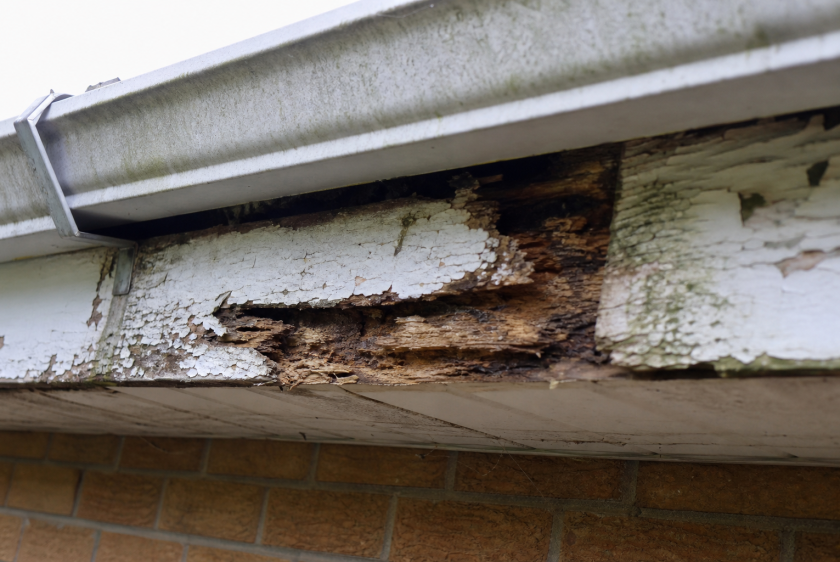
This is the damage most homeowners miss entirely because it hides behind the gutter itself. Water that backs up behind failing gutters saturates the fascia board and can wick into the soffit and even the roof decking.
Signs to look for include paint bubbling or peeling on your fascia, visible dark spots or soft areas on the wood, and mold or mildew growing where the gutter meets the roofline. By the time you can see rot from the ground, the damage has typically been progressing for a year or more.
Replacing gutters at this stage also means replacing some fascia board — but waiting longer means the damage spreads to structural framing, which is far more expensive.
SIGN #4
Erosion, Pooling Water, or Staining Near Your Foundation
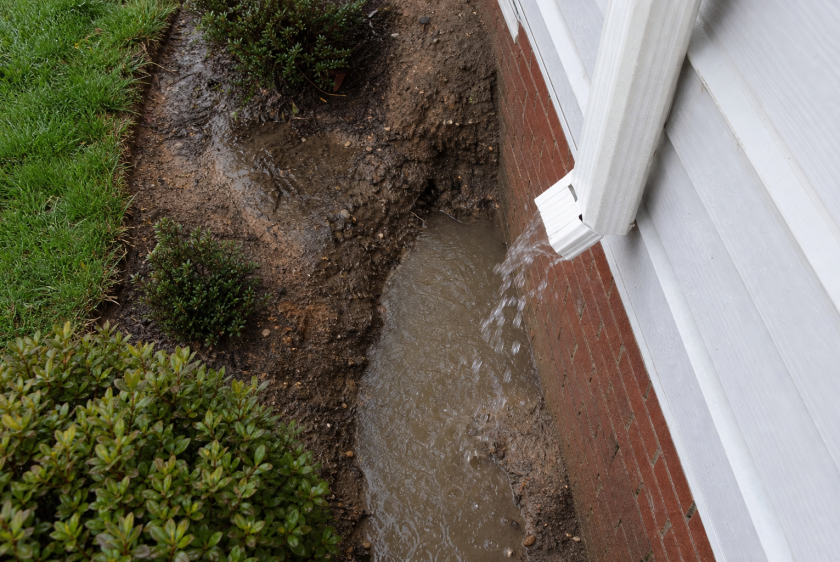
Your gutters exist for one fundamental reason: to move water away from your foundation. When they fail, water dumps directly against the base of your home. Look for these signs around your foundation:
Mulch beds washed away or trenches cut into landscaping below gutter lines
Staining, mineral deposits, or mold on your foundation walls
Water pooling near the foundation after storms
Basement moisture, musty smells, or visible water intrusion
Northern Virginia homes built on clay-heavy soil are particularly vulnerable. Clay expands when wet and contracts when dry, putting enormous lateral pressure on foundation walls. Properly functioning gutters with correct downspout extensions are your primary defense against this cycle.
SIGN #5
Visible Rust, Cracks, or Separated Joints
Walk around your home on a dry day and inspect your gutters from the ground. Look for:
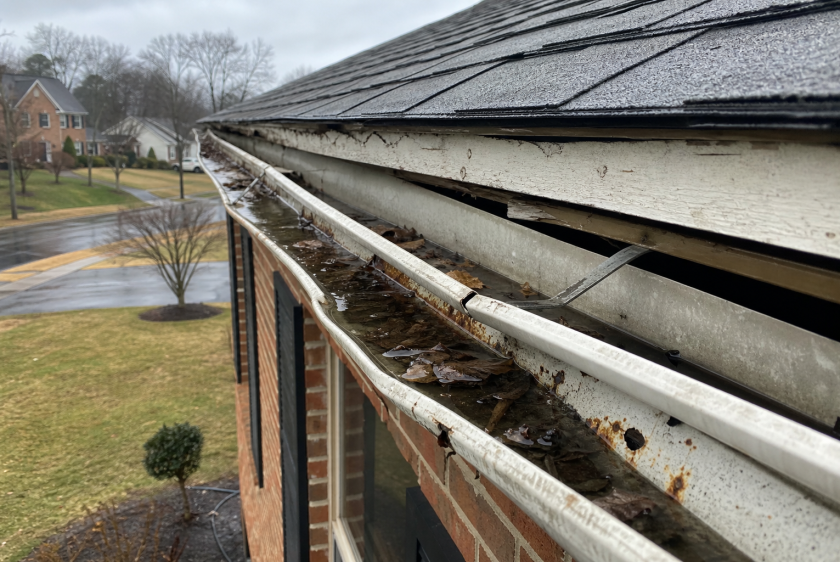
Orange or brown rust spots (especially at seams and inside corners)
Visible cracks or splits in the gutter channel
Joints where sections have separated or caulk has failed
Holes from corrosion, particularly near fastener points
One or two small issues can sometimes be patched. But if you are finding problems in multiple sections, the system has reached the end of its service life. Patching a failing gutter system is like patching a worn-out tire — it might hold temporarily, but it is not solving the underlying problem.
Should You Repair or Replace?
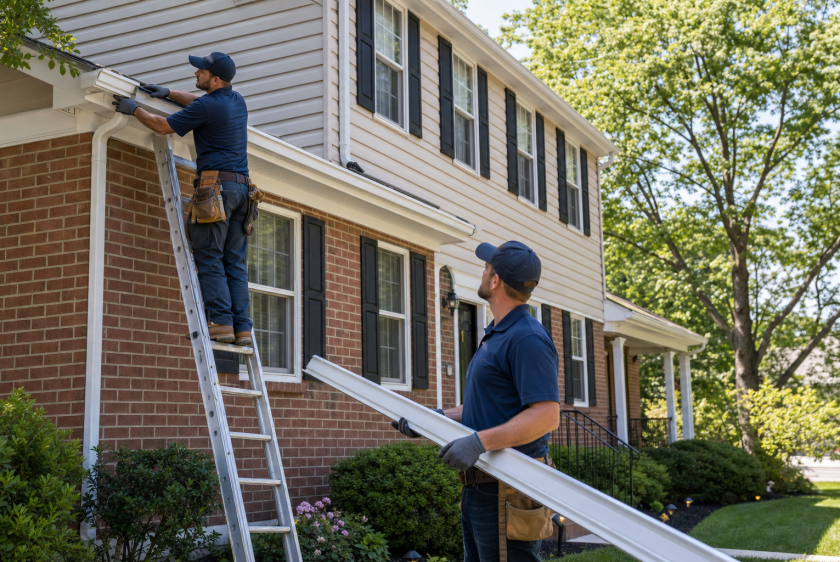
General guidance: if damage is limited to one short section and the rest of the system is sound, repair makes sense. If you are seeing multiple signs from this list, or if your gutters are more than 20 years old, full replacement with modern seamless gutters is the better investment.
Modern gutter systems also pair well with gutter protection solutions that dramatically reduce maintenance and extend system life — particularly important in Northern Virginia where mature tree canopy means constant leaf and debris exposure.
Protect Your Home Before the Next Storm
Gutter failure is progressive. Every storm that passes with damaged gutters means more water hitting your fascia, your foundation, and your landscaping. TNC Exteriors provides free gutter assessments for Northern Virginia homeowners.