
James Hardie vs Vinyl Siding: What Northern Virginia Homeowners Should Know
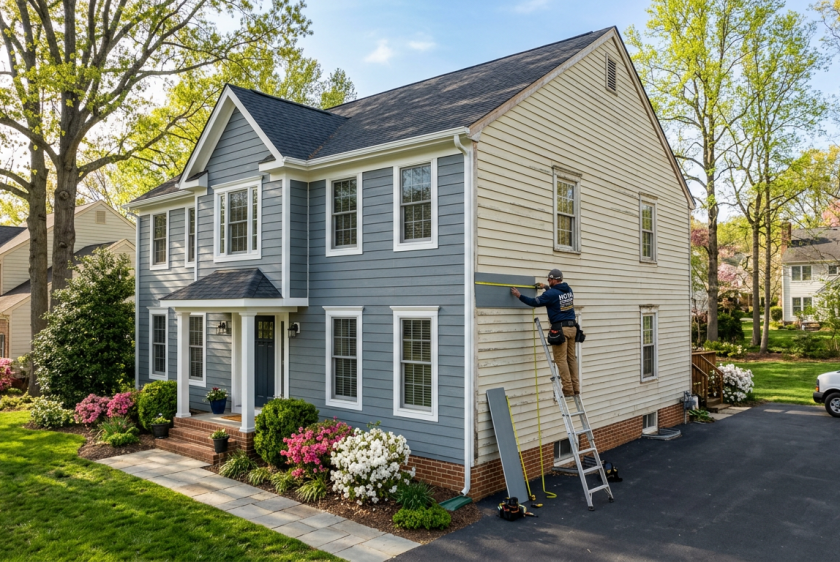
James Hardie vs Vinyl Siding: What Northern Virginia Homeowners Should Know
Why Northern Virginia Homeowners Are Upgrading Their Siding
Siding installation in Northern Virginia is one of the highest-return exterior upgrades you can make. According to the latest Remodeling Magazine Cost vs. Value report, fiber cement siding replacement recoups over 80 percent of its cost at resale in the Mid-Atlantic region. Vinyl siding is not far behind.
But the decision between siding materials is not just about resale value. It affects your monthly energy bills, your maintenance schedule for the next 20 years, and how your home holds up against the humidity, wind, and temperature swings that define our climate.
Here is an honest comparison of the two most popular siding options in the region — James Hardie fiber cement and vinyl — so you can make the right call for your home.
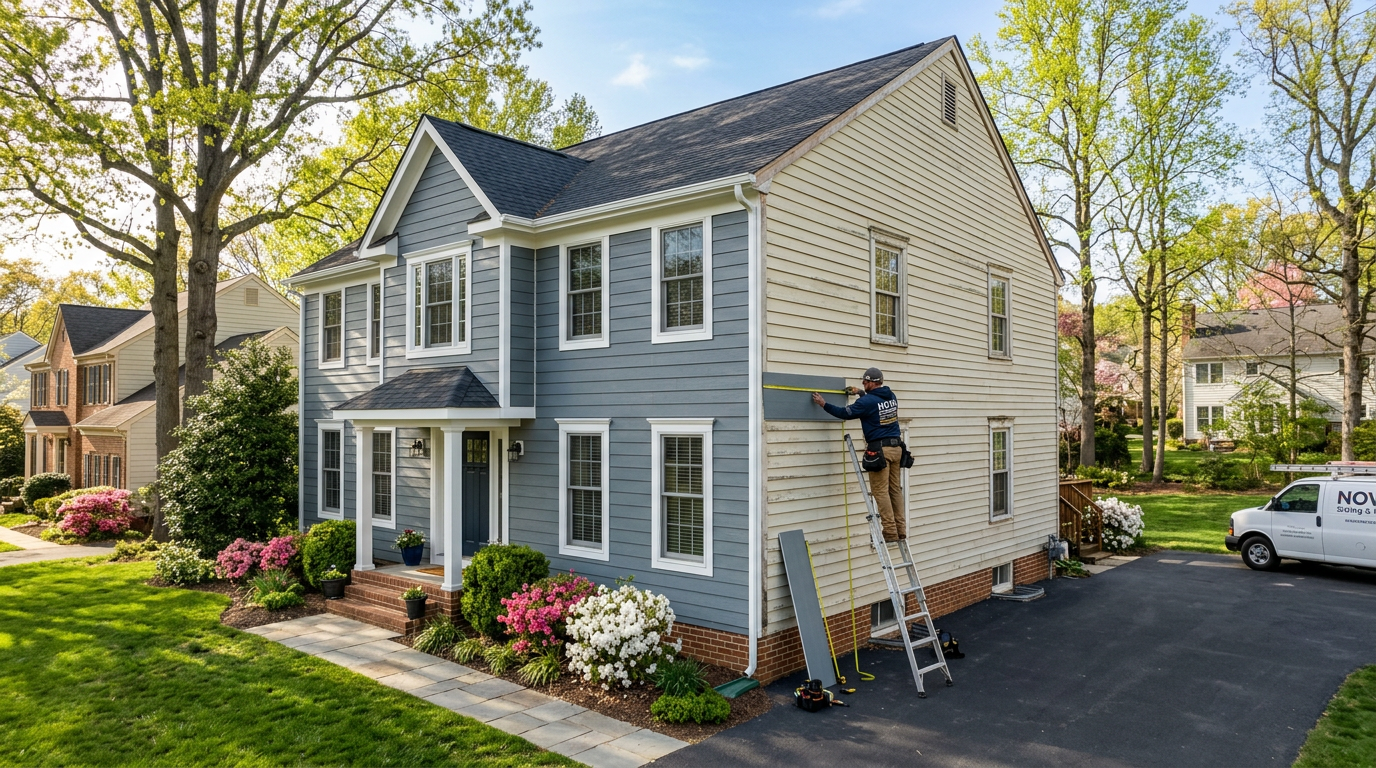
James Hardie Fiber Cement Siding: The Premium Choice
James Hardie is the dominant fiber cement siding brand in the United States, and for good reason. Their HardiePlank lap siding is engineered specifically for different climate zones, and the version sold in Northern Virginia is their HZ5 formulation, designed to resist moisture and freeze-thaw cycling.
Key advantages of James Hardie siding:
- 50-year product warranty. James Hardie backs their siding with one of the longest warranties in the industry. Their ColorPlus finish carries a separate 15-year warranty against peeling, cracking, and fading.
- Non-combustible material. Fiber cement does not burn, which is a meaningful safety advantage if your home is in a wooded area or close to neighboring structures.
- Holds paint significantly longer. The ColorPlus factory-finish outlasts field-applied paint by years. If you choose the primed version and paint it yourself, expect to repaint every 10 to 15 years rather than the 5 to 7 years typical of wood siding.
- Resistant to woodpeckers and insects. Homeowners in McLean, Great Falls, and other heavily wooded communities know this matters.
The trade-offs: James Hardie is heavier and more labor-intensive to install, which increases the upfront cost. Typical siding installation in Northern Virginia for James Hardie runs between $10 and $15 per square foot installed, depending on the profile and finish.
Vinyl Siding: The Budget-Friendly Workhorse
Vinyl siding has come a long way from the thin, glossy panels of the 1990s. Modern premium vinyl, particularly insulated vinyl siding, offers genuine performance at a lower price point.
Key advantages of vinyl siding:
- Lower installed cost. Quality vinyl siding typically runs $5 to $9 per square foot installed, making it roughly half the cost of fiber cement for a full siding installation in Northern Virginia.
- Zero painting required. The color is baked through the entire panel. You will never need to scrape, prime, or paint vinyl siding.
- Insulated options boost energy efficiency. Insulated vinyl siding adds a layer of rigid foam behind each panel, reducing thermal bridging through your wall studs and lowering heating and cooling costs.
- Easy repairs. Individual damaged panels can be swapped out without disturbing the surrounding siding, and the material is widely available.
The trade-offs: Vinyl can warp or melt if exposed to concentrated reflected sunlight (common near energy-efficient windows). It also expands and contracts with temperature changes, which means improper installation leads to buckling. Always choose a contractor experienced in vinyl siding for your area.
Comparing the Two Options Side by Side
Here is how the two materials stack up on the factors that matter most to homeowners in Arlington, Alexandria, and surrounding areas:
- Durability: James Hardie wins. It resists impact, moisture, and pests better than vinyl over 30-plus years.
- Maintenance: Vinyl wins. No painting, no caulking, just an occasional wash with a garden hose.
- Curb appeal: James Hardie wins for homes where a premium, authentic look matters. It mimics real wood grain convincingly. Premium vinyl profiles are getting close, but trained eyes can tell the difference.
- Cost: Vinyl wins on upfront price. James Hardie often wins on lifetime cost when you factor in repainting avoidance and longevity.
- Resale value: James Hardie has a slight edge in higher-end neighborhoods. In mid-range communities, both perform well.
What to Expect During a Siding Installation
Regardless of which material you choose, a proper siding installation follows these steps:
- Removal of existing siding down to the sheathing
- Inspection and repair of wall sheathing and framing
- Installation of a quality house wrap (like Tyvek or equivalent)
- Proper flashing around windows, doors, and penetrations
- Installation of starter strips, J-channels, and corner posts
- Panel installation with correct nailing patterns and expansion gaps
- Trim, soffit, and fascia work to complete the finished look
A typical siding installation in Northern Virginia for an average-sized home takes three to five days, weather permitting.
Which Siding Is Right for Your Home?
If you are in a higher-end community and plan to stay in your home long-term, James Hardie is usually the better investment. If you need to control upfront costs or you are preparing a home for sale, quality vinyl siding delivers excellent results at a lower price.
Either way, the contractor matters as much as the material. Contact Nations Choice Exteriors for a free siding consultation. We install both James Hardie and premium vinyl siding across Fairfax, Arlington, McLean, Alexandria, and the greater Northern Virginia region.


